

Sinharaja Forest
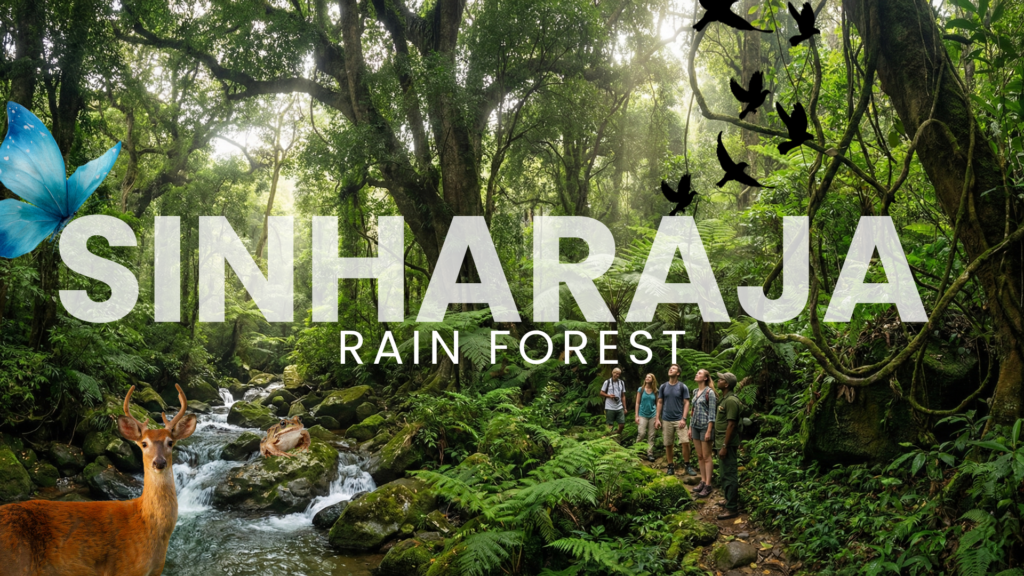
The Sinharaja Forest Reserve is the only viable primary tropical rainforest that remains in Sri Lanka. It is a recognized UNESCO World Heritage Site, a veritable treasure trove of endemic species such as trees, insects, amphibians, reptiles, birds, and mammals. It does offer a very serene experience for the walk, unlike the safaris held within the Yala reserves, where the environment remains arid, replete with the rustling of trees, the gurgle of streams, and the chirping of birds.
The Ecological Jewel of Sri Lanka
Sinharaja Forest Reserve is more than just a forest; it is a living laboratory of evolution. Located across the boundaries of Galle, Matara, and Ratnapura districts, it saves the island’s most precious biological treasures. The forest covers an area of approximately 11,187 hectares and is famous for its "bird waves"—mixed flocks of different bird species moving together. While leopards are present, they are rarely seen; the real stars here are the colorful birds, unique lizards, and the purple-faced langur monkeys.
Special Details
- Recognized as a UNESCO World Heritage Site & Biosphere Reserve
- Home to 95% of Sri Lanka's endemic bird species
- Famous for Trekking, Bird Watching, & Waterfall Hikes
- Comprises dense canopy forests, crystal-clear streams, and waterfalls such as Kekuna Ella & Pathan Oya
- Entirely a walking trail (No Jeeps permitted inside)
- Leech protection is strongly advised while trekking
Distance Between Main cities
Colombo → Sinharaja (Kudawa): ~128 km | 3.5 – 4 hours
Galle → Sinharaja (Pitadeniya): ~80 km | 2 – 2.5 hours
Ratnapura → Sinharaja (Kudawa): ~45 km | 1.5 hours
Matara → Sinharaja (Deniyaya): ~85 km | 2.5 hours
Sinharaja Forest Reserve provides a peaceful yet adventurous opportunity to trek through a prehistoric area. This forest is internationally renowned for its bird species, making it a favorite among bird watchers. One can easily get a sight of the Sri Lanka Blue Magpie, Red-faced Malkoha, Orange-billed Babbler, and the Green-billed Coucal.
Other than birds, there is the Purple-Faced Langur and Toque Macaque, which are exclusive to the forests. Occasional encounters of Rusty-Spotted Cats and Fishing Cats are reported. The forests and streams are vibrant with various insects, such as Green Pit-Vipers, Hump-Nosed Lizards, and a variety of butterflies like Tree Nymph and Common Birdwings.
The reserve is also a catchment area for some of the major rivers in the land, offering picturesque views with waterfalls like Doowili Ella and Brahmana Ella. Contrary to Yala, this is a spot for silent observation, with the sounds of the forests providing the music.
Important: For tourists, unlike in other protected areas, Solo Explorations are strictly not allowed because of the density of the forest, where one can easily get lost. Guides/trackers, available at the entrance, need to accompany every tourist.
Hotels & Stay Places Around Sinharaja
Luxury & Eco-Lodges
The Rainforest Ecolodge (Deniyaya) – Award-winning luxury eco-chalets made from recycled shipping containers, located right within the tea patch bordering the forest.
Rain Forest Edge – A boutique hotel offering comfortable rooms with stunning views of the forest canopy and modern amenities.
The Ark – An elevated retreat offering a unique architectural experience and panoramic views of the Sinharaja valley.
Mid-Range & Budget Stays
Sinharaja Forest Gate (Kudawa) – A popular and comfortable hotel located very close to the main Kudawa entrance.
Blue Magpie Lodge – Known for its excellent location for birdwatchers and authentic Sri Lankan meals.
Martin’s Simple Lodge – A legendary budget spot right at the edge of the forest, favored by serious birdwatchers and researchers.
Jansen’s Bungalow – A colonial-style bungalow offering a homely atmosphere in Sinharaja.