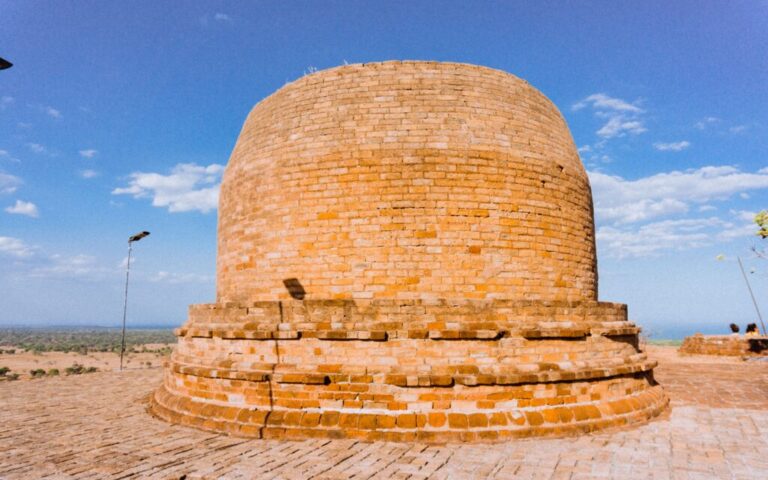
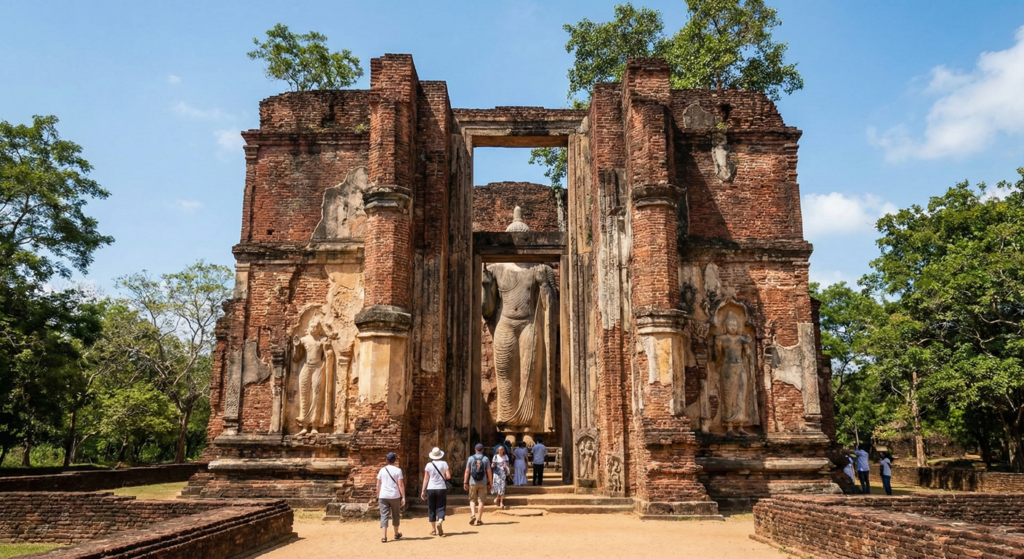
Kudumbigala Monastery is an ancient Buddhist monastery located in the Ampara District of Sri Lanka’s Eastern Province. Surrounded by dry-zone forests and rocky hills, this peaceful site is known for its ancient meditation caves, rock inscriptions, and distinctive cylindrical stupa. The monastery offers visitors a combination of history, spirituality, hiking, and beautiful natural scenery.
Kudumbigala is believed to have been an important forest monastery where Buddhist monks lived and practised meditation. The complex includes numerous ancient caves, some with drip-ledges and inscriptions, while the hilltop stupa provides impressive views of the surrounding forest. Its quiet setting makes it a special destination for travellers interested in Sri Lanka’s ancient Buddhist heritage and lesser-known historical sites.
Location on Map
Things To See
What can we do ?
A visit to Kudumbigala Monastery is ideal for travellers who enjoy history, nature, photography, and light adventure. You can explore the ancient monastery complex, walk through the forest surroundings, and climb towards the hilltop stupa for panoramic views.
Explore the Ancient Caves – Discover the caves once used by monks for meditation and living.
Visit the Cylindrical Stupa – Climb towards the distinctive stupa located on the rocky hill.
Enjoy the Scenic Views – See the surrounding dry-zone forest from higher points.
Discover Ancient Inscriptions – Look for historical inscriptions and features around the caves.
Photography – Capture the rocky landscape, ancient structures, forest, and panoramic views.
Experience the Peaceful Atmosphere – Enjoy the quiet environment away from busy tourist destinations.
Go for a Short Hike – The climb provides an enjoyable outdoor experience for visitors who are comfortable walking on uneven terrain.
Which time best for visit ?
The dry season is generally the most comfortable time to visit Kudumbigala Monastery, especially for hiking and exploring the rocky terrain. Early morning is a particularly good choice because the weather is cooler and the surroundings are peaceful. Avoid climbing during the hottest part of the day, and carry sufficient drinking water.
Early Morning (Sunrise / Golden Hour)
Cool weather, soft light, fewer crowds
Late Afternoon (Sunset / Golden Hour)
Warm tones, scenic skies, ideal for photos
Midday
Not recommended due to heat and harsh sunlight
Night
Suitable only for city lights and special photography
Early Morning (Sunrise / Golden Hour)
Cool weather, soft light, fewer crowds
Late Afternoon (Sunset / Golden Hour)
Warm tones, scenic skies, ideal for photos
Midday
Not recommended due to heat and harsh sunlight
Night
Suitable only for city lights and special photography
How can we arrive?
Kudumbigala Monastery is located near Panama, in the southeastern part of Ampara District. The final approach can involve rough roads and a climb, so a private vehicle with a suitable driver is convenient. Local transport can be arranged from nearby towns such as Ampara or Panama.
By Bus
You can take a bus to Ampara and continue towards the Panama area using local transport.
Since buses do not take you directly to the monastery, a tuk-tuk, taxi, or other local transport is needed for the final part of the journey.
By Train
There is no direct train service to Kudumbigala Monastery.
You can travel by train to a suitable railway station in the wider Eastern Province and continue the journey by bus, taxi, or private vehicle.
ByPrivete Vehicle
From Ampara, follow the road towards the southeastern part of the district and continue towards Panama and the monastery area.
Start planning your
Sri Lanka trip
for free
Build your itinerary, save places, optimize routes, and explore Sri Lanka with KKF Trip Basket.