
Kandy
Temple of the Tooth
Religious Site
Historical Place
Cultural Attraction
Overview
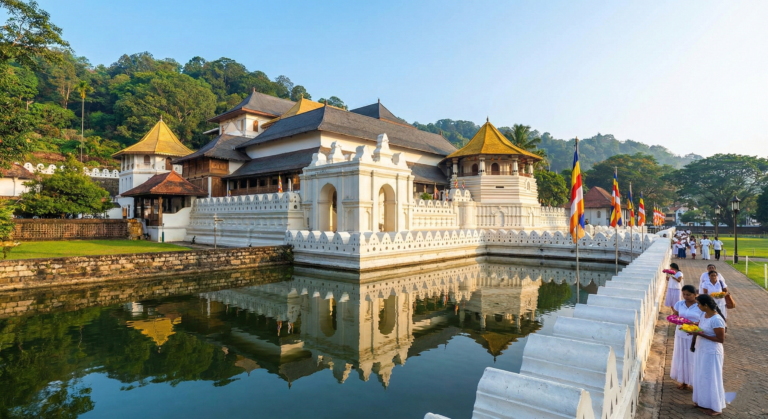
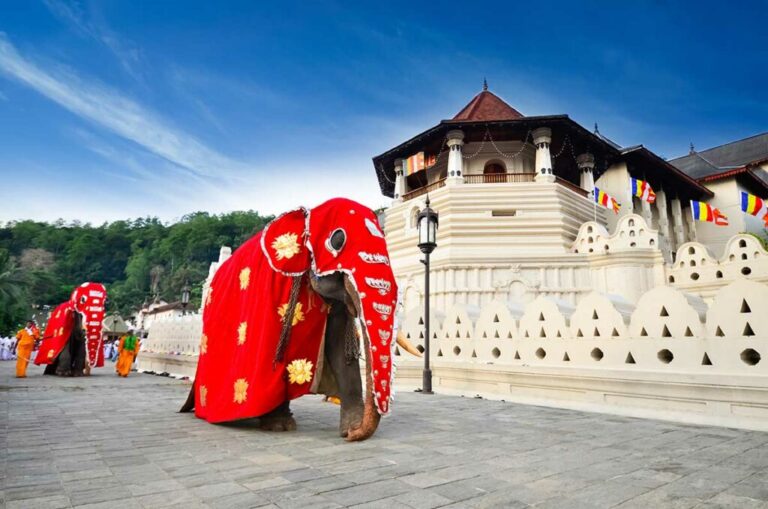
The Temple of the Tooth proudly stands as the most sacred Buddhist shrine located in the Kandy city center. Historically, ancient Kandyan kings built this magnificent palace complex to safely house the sacred tooth relic of Lord Buddha. Uniquely, UNESCO officially recognizes this deeply spiritual site as a World Heritage location. Furthermore, thousands of local devotees and foreign travelers visit this beautiful sanctuary daily to respectfully offer beautiful lotus flowers. Therefore, we highly recommend this cultural destination for history lovers and spiritual seekers exploring the island.
Location on Map
Things To See
What can we do ?
The sacred complex offers a deeply spiritual journey filled with historical wonders. Consequently, you will find several meaningful activities during your visit to the Temple of the Tooth:
Observe the Thewava Rituals: First, visitors can respectfully watch the traditional drumming and offering ceremonies that monks actively perform three times a day.
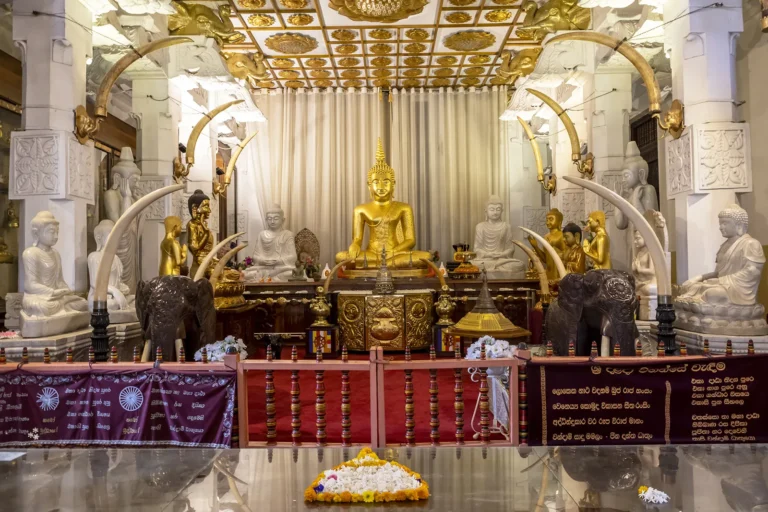
Explore the Main Shrine: Next, admire the intricate golden roof and detailed wood carvings that beautifully decorate the central inner sanctuary.
Visit the Alut Maligawa: Additionally, you must explore the newer shrine room that beautifully displays dozens of impressive golden Buddha statues donated by Thai devotees.
Light Oil Lamps: Finally, light traditional clay lamps in the dedicated courtyard to peacefully experience a moment of quiet meditation.
Which time best for visit ?
Visiting during the Early Morning provides the most authentic and culturally rich experience. During these hours, dedicated monks actively perform the first traditional offering ceremony (Thewava) to bless the sacred relic. Consequently, you can completely immerse yourself in the rhythmic drumming and chanting without feeling overwhelmed by large tourist groups. Moreover, arriving early helps you peacefully walk through the shrines before the tropical heat intensifies outside the complex.
Early Morning (Sunrise / Morning Pooja)
Cool weather, soft light, and a highly spiritual atmosphere during the traditional morning rituals.
Late Afternoon (Sunset / Evening Pooja)
Warm tones for photographing the exterior, active evening ceremonies, and a very relaxing vibe.
Midday
Not recommended because the stone pathways severely burn your bare feet under the harsh tropical sunlight.
Night
Suitable only for peacefully viewing the beautifully illuminated outer walls and safely enjoying the quiet city atmosphere.
Early Morning (Sunrise / Morning Pooja)
Cool weather, soft light, and a highly spiritual atmosphere during the traditional morning rituals.
Late Afternoon (Sunset / Evening Pooja)
Warm tones for photographing the exterior, active evening ceremonies, and a very relaxing vibe.
Midday
Not recommended because the stone pathways severely burn your bare feet under the harsh tropical sunlight.
Night
Suitable only for peacefully viewing the beautifully illuminated outer walls and safely enjoying the quiet city atmosphere.
How can we arrive?
The sacred temple lies prominently beside the picturesque Kandy Lake right in the city center. Therefore, you can easily reach this famous destination using multiple convenient transport options.
By Bus
Alternatively, you can take a local bus to the Kandy main transport hub. Once you exit the busy station, you simply walk for ten minutes along the scenic lake to safely reach the entrance.
By Tuk Tuk
To begin with, hiring a tuk-tuk offers the fastest and most convenient option for travelers staying nearby. Generally, this quick ride effortlessly drops you right in front of the main security gates.
By Private Vehicle
Drive to Polonnaruwa via Dambulla–Habarana Road.
Parking is available near the Polonnaruwa heritage zone, and Kiri Vehera is accessible by road.
Start planning your
Sri Lanka trip
for free
Build your itinerary, save places, optimize routes, and explore Sri Lanka with KKF Trip Basket.
Frequently Asked Questions
How much time should I spend at the temple?
Generally, most visitors spend roughly two hours exploring the main shrines and surrounding museums. However, devoted pilgrims often stay much longer to peacefully meditate in the quiet courtyards.
Is there a strict dress code to enter?
Absolutely! You must wear modest white or light-colored clothing that completely covers your shoulders and knees. Consequently, security guards will strictly deny entry if you wear shorts, sleeveless tops, or revealing outfits.
Do I need to remove my shoes?
Yes, the management strictly requires all visitors to remove their footwear before entering the sacred premises. Therefore, you must safely leave your shoes at the dedicated counter located near the main entrance gate.